In the modern digital era, having an online presence is no longer optional. Whether you want to start a blog, launch a business, or create a personal brand, the first and most important step is choosing a domain name. A domain name is not just a technical requirement—it represents your identity on the internet.
Many beginners buy domains without understanding how they work, what types exist, or which one suits their purpose. This article explains everything in a clear and simple way, from the basics of domains to choosing and buying the right one.
What Is a Domain Name?
A domain name is the unique address of a website on the internet. It is what users type into a browser to visit a website, such as:
example.com
Behind every domain name is an IP address, which is a numerical identifier used by servers to locate each other. Since IP addresses are difficult to remember, domain names were created to make the internet more user-friendly.
In simple words, a domain name is the readable version of a website’s internet address.
How Does a Domain Name Work?
When someone enters a domain name into a browser, the request goes through the Domain Name System (DNS). DNS acts like a directory that converts the domain name into its corresponding IP address and connects the user to the correct web server.
This entire process happens within seconds. The global domain system is managed and regulated by organizations such as ICANN, which ensures that domain names remain unique and properly assigned worldwide.
Structure of a Domain Name
A domain name is usually made up of two main parts:
- Second-Level Domain (SLD)
This is the main name of the website, such as “example” in example.com. - Top-Level Domain (TLD)
This is the extension at the end, such as .com, .org, or .net.
Together, these parts form a complete domain name.
Types of Domain Names
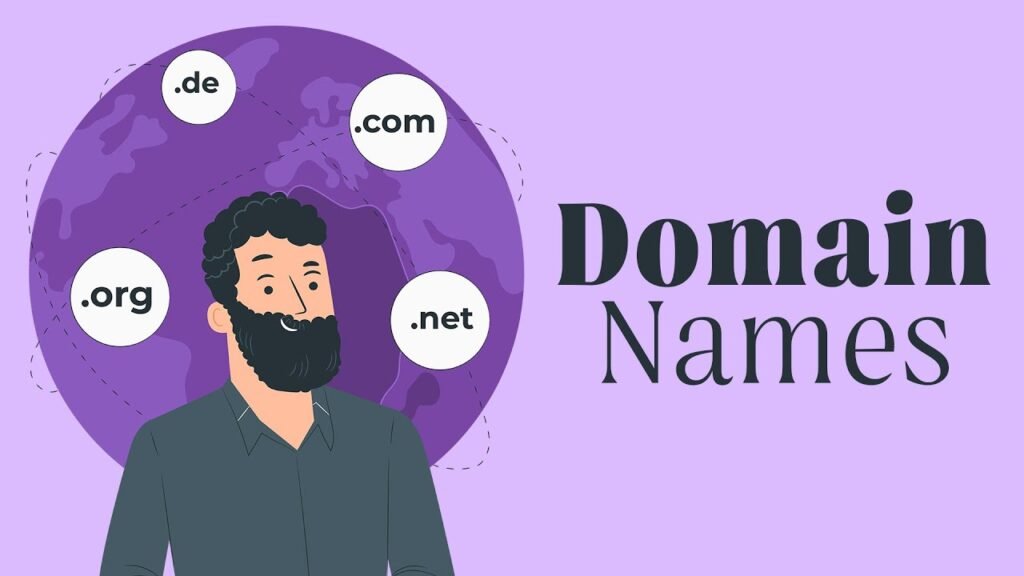
Domain names are divided into different categories based on their purpose and geographical use.
1. Generic Top-Level Domains (gTLDs)
These are the most commonly used domain extensions. Examples include:
- .com – Commercial websites and businesses
- .org – Organizations and non-profits
- .net – Network-related services
- .info – Informational websites
Among these, .com is the most popular and trusted extension globally.
2. Country Code Top-Level Domains (ccTLDs)
These domains are associated with specific countries and regions. Examples include:
- .in – India
- .us – United States
- .uk – United Kingdom
- .au – Australia
These domains are ideal for businesses or websites targeting a local audience.
3. New Generic Top-Level Domains (New gTLDs)
New domain extensions were introduced to provide more variety and branding options. Examples include:
- .tech
- .blog
- .store
- .online
- .ai
These domains are commonly used by startups, tech companies, and niche websites.
4. Subdomains
A subdomain is a prefix added before the main domain. For example:
blog.example.com
Subdomains are used to organize different sections of a website, such as blogs, support pages, or regional content.
How to Choose the Right Domain Name
Choosing the right domain name is crucial for long-term success. A good domain name should be:
- Easy to remember
- Short and clear
- Easy to spell
- Relevant to your niche or brand
- Free from unnecessary numbers or symbols
It is also important to think about the future. Choose a name that will still be relevant as your website grows.
How to Buy a Domain Name (Step-by-Step Guide)
Buying a domain name is a simple process, but choosing the right platform and understanding each step is important. A domain is usually purchased from a domain registrar, which is a company authorized to sell and manage domain names.
Step 1: Choose a Trusted Domain Registrar
A domain registrar is where you search, buy, renew, and manage your domain. Below are some of the most popular and trusted places where you can buy a domain name:
Popular Domain Registrars to Buy a Domain Name
You can buy domain names from many platforms, but these are widely used and beginner-friendly:
- GoDaddy
One of the largest and most popular domain registrars in the world. It offers a wide range of domain extensions, easy management tools, and beginner support. - Namecheap
Known for affordable pricing, free WHOIS privacy, and a clean user interface. Very popular among bloggers and developers. - Hostinger
A good option if you want both hosting and domain together at a low cost, especially for beginners. - Bluehost
Commonly used by WordPress users. It is suitable if you are planning to build a website immediately after buying a domain. - Squarespace Domains
Simple and clean domain management, especially useful if you are creating a website using the Squarespace platform.
Each registrar offers slightly different pricing, features, and renewal costs, so comparing before buying is always a smart move.
Step 2: Search for Your Domain Name
Once you choose a registrar, use their search tool to check whether your desired domain name is available.
If the domain is already taken, the registrar may suggest alternative names or extensions.
Step 3: Choose the Right Domain Extension
Select an extension that matches your purpose:
.comfor global and professional use.in,.us,.ukfor country-specific targeting.blog,.tech,.storefor niche branding
If possible, always prefer .com because it is widely trusted and easy to remember.
Step 4: Review Pricing and Add-ons
Before checkout, review:
- Domain price for the first year
- Renewal cost (important)
- WHOIS privacy (often free on some platforms)
Avoid unnecessary add-ons unless you actually need them.
Step 5: Complete Registration and Payment
Enter your basic details, choose the registration duration (1–10 years), and complete the payment.
After payment, the domain becomes officially yours.
Step 6: Manage Your Domain
After buying the domain, you can:
- Connect it to a hosting provider
- Set DNS records
- Create email addresses
- Enable auto-renewal
Domain management is done through the registrar’s dashboard.
Important Tips Before Buying a Domain
Buy from a trusted registrar only
Always check renewal prices, not just first-year discounts
Avoid trademarked or copyrighted names
Keep the domain short and easy to spell
Conclusion
A domain name is the foundation of any website. It represents your brand, your content, and your credibility online. Understanding what a domain is, its types, and how to choose the right one helps you make informed decisions and avoid common mistakes.
With the right domain name, you set a strong base for your online journey—whether it is a blog, a business, or a personal project.